"peterson principles - the writing and wisdom of keith peterson"…
jeffery mcnary
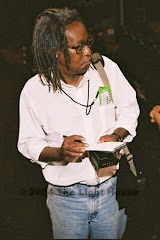
Keith Peterson is
clearly attracted to books, to the work and business of letters. He is rarely
averted from the genre with the exception of his occasional photography, which
opens other boulevards, his wife Gail, and his bookstore cat, Hodge. He doesn’t
devote much time to purple or yellow pages. His work is way too busy bursting
out,…and offering suggestions.
Peterson’s first novel,
“The Body in the Bookstore Sink”, a mystery, was driven by memories of a close
friend, Steve, and stories about him. Father Stephan, the character based on the friend, is a Russian Orthodox
priest. Here we find Seth Pearson, a laid back , used book dealer in Chicago
were minding when Seth finds a dead body in the bookstore when closing up.
There’s a movie star with a history, killers, and an Ed Wood appreciation
society. He even tosses in a drug dealing gang rolling on Chicago’s West Side.
Among other things, this unlikely crew’s coming together would help in funding
the repair for the roof of Father Stephan’s church. There’s no mythic
connection between his characters. They live in real time…in existing situations.
Nothing dispiriting about that.
There’s
a complexity to the writer, book store owner, author, poet, burlesqued
minimalist, as his writing moves comfortably from one genre to another. “With
fiction”, says Peterson, “one story at a time is the most I can manage, if
that. A poem will occur sometimes now and then, but I can't explain how or why.”
Recently,
the writer, proprietor did a read of his work in progress, “Lucky Buck” at SHoP (Southside Hub of Production),“ a community centered project that
encouraged local culture making, etc in “Lucky Buck",
Peterson kick in with the 2003, Steve Bartman sticking out his hand for a foul, and devastating the Cubs run for the World Series. The baseball involved becomes famous. Unknown to all but an old beer vendor called A-Train, the real ball was captured by Randy Buckly, an old friend of, yep, Father Stephan. A decoy he set loose was the one which was auctioned off for a huge sum. Now, a few years later, Randy is dead, a thief is plaguing Seth’s bookstore, the 10 year old west side kid named Toy, living secretly in Randy’s apartment is on the run with the actual ball. Or is it the reall? Oh, and Pierre Tessouat Mather, an occultist, a retired mob bookmaker and Cubs collector are all vectoring in on that baseball. Father Stephan wants justice,Hamid wants vengeance.
Peterson kick in with the 2003, Steve Bartman sticking out his hand for a foul, and devastating the Cubs run for the World Series. The baseball involved becomes famous. Unknown to all but an old beer vendor called A-Train, the real ball was captured by Randy Buckly, an old friend of, yep, Father Stephan. A decoy he set loose was the one which was auctioned off for a huge sum. Now, a few years later, Randy is dead, a thief is plaguing Seth’s bookstore, the 10 year old west side kid named Toy, living secretly in Randy’s apartment is on the run with the actual ball. Or is it the reall? Oh, and Pierre Tessouat Mather, an occultist, a retired mob bookmaker and Cubs collector are all vectoring in on that baseball. Father Stephan wants justice,Hamid wants vengeance.
Peterson’s intimate
rapport with the characters, and the static and frenetic coexist, in his work
disparities of American culture entertainingly collide with a very subtle and
yet sharp wit. They are simple deals, despite points of soaring eclecticism. ”In
the Father Stephan/Seth novels, many of the characters are based, to greater or
lesser extent, on real people. With some, I may take simply a physical
appearance and fill in the blank with what I need. With many others - Father
Stephan, Seth, Stan Wilson, Allison, Angel, Charlie Ruggles - these are the
fictional versions of people I know”, Peterson shares. “The only way I can spend time with friends
of mine who have passed away is to write them into my books. So, I suppose I'm
writing a kind of 'roman a clef'. The trick to keeping them in their lanes is
to be able to hear their voices, because the way a person talks is so rooted in
their personality.” He continues, “The big danger, always, is to have a
character begin to talk like me. With the characters I completely make up, that
can be a danger, and I do try to imagine more of their lives than I put in the
book - it's the aspect of writing fiction about which I feel most insecure.”
I
have to admit I've never considered the question - I think the authors you
mention are more serious of purpose than I have been, at least with my
bookstore novels. My characters, while often based on real people, would
probably strike many as less 'realistic' than those in Algren's romantic
naturalism, or Bellow, whom I won't attempt to categorize. I suppose my stuff
is simply rooted in my own personal geography - my friends, what I've done for
a living in bookselling and the characters I've met that way, my imagination,
such as it is. A few characters are not very realistic at all, like PierreTessouat Mather and his weird little acolyte
Edwardo.”
Peterson
generally writes at the bookstore, (Chicago’s Selected Works) when given the
time. “But there's no particular time, other than whenever I get a notion about
what's going to happen next, or think of a line of dialogue that is perfect for
the beginning of a chapter. Right now, at the stage I'm at with “Lucky Buck”, a
strange tangle of plot lines need somehow to be resolved, so I spend my time
thinking more about that - the what's going to happen in part.

“Besides Randy
and Steve, there were only a couple other ball shaggers outside the ball park,
it not having evolved into the trendy and competitive activity that it would
twenty or thirty years later”, Peterson writes. “There was Eddie something or
other - Old Time Eddie they called him. He must have been retired because every
time Randy and Steve were out there, Eddie was there too, sitting on his metal
milk crate, listening to the game on one of those transistor radios that were
becoming more common lately as the prices dropped. And then there was another
big kid leaning against a tree across the street. The big door to the firehouse
was open too, but those guys sitting on chairs there didn’t count. They never
got up to chase a ball”, it continues.
|
|
When asked if
and how his work fits into the vernacular of the so-called “Chicago Writers”
school, Peterson responds, “I have to admit I've never considered the question
- I think the authors you mention are more serious of purpose than I have been,
at least with my bookstore novels”. Continuing, “My characters, while often
based on real people, would probably strike many as less 'realistic' than those
in Algren's romantic naturalism, or Bellow, whom I won't attempt to categorize.
I suppose my stuff is simply rooted in my own personal geography - my friends,
what I've done for a living in bookselling and the characters I've met that
way, my imagination, such as it is. A few characters are not very realistic at
all, like PierreTessouat Mather and his weird little acolyte Edwardo”, the
story continues, “They had a radio on in the firehouse that you could hear. It
was a 1:20 start, one of those famous Wrigley day games, and the stands were
partially filled, like usual, though they couldn’t see much from where they
were. That old ticket taker who’d been there for a million years at Gate N, the
entrance to the bleachers, he usually wandered off by the sixth inning, and
that was when they would sneak into the park. Then they could sit where they
wanted - nobody really cared.”
It’s difficult
to resist going futher without sharing,“ ‘Banks is up’ commented Old Time Eddie
from his milk crate. Steve stopped talking and gazed over the outfield wall.
The old red brick wall, the dark green of the scoreboard off to the left in the
middle of the bleachers, and the blue afternoon sky way up above with one lone
cloud, struck him as suddenly beautiful, or even deeper than beautiful,
somehow. Inside the park, the fans started cheering, the kind of roar that
meant something good was happening for the Cubs. Suddenly there was a flash of
white and a thunk up above them, then a rattle and a soft crack, like. A couple
leaves and a twig fell from the tree out onto the street. Old Time Eddie was
up, and the kid across the street started running over to Randy’s tree. After
another couple soft thuds from above, the Ernie Banks home run ball fell down
directly into Randy’s mitt, cradled there in his arms as he leaned there
against the tree. A couple more little twigs fell down too and one glanced off
his head. The older kid skidded to a stop with an amazed and then disgusted
look.,’Whooo!’ yelled Steve, jumping around like a maniac. ‘Nice catch, kid,’
said Old Time, with a mixture of sarcasm and awe.”
The author doesn’t
introduce abstraction while driving home his encounters. “Randy stared
unbelieving at the ball now in his mitt,un-crossed his arms and took it in his
throwing hand. He put the mitt on his left, his catching hand. Now he was ready
to catch something. His face reflected excitement, confusion, and deep pleasure”,
the story continues, “You weren’t even looking and it fell right into your
mitt, you lucky dog,” said Steve, calming down a little. “Lucky Randy Buckley.
Lucky Buckley. No - Lucky Buck. That’s it. Lucky Buck.” Old Time laughed.
“Lucky Buck. Yeah, kid, that’s you all right.”
Following all of
those post-modern works attempting to release rein to their fancies, Peterson’s
work pulls together some extrodinary approaches, hardly blandly dressed.
Peterson’s soon to be released
chap-book of poetry, “At the Point and Other Poems”, offers overlapping,
dancing verse which allows a recurring image of the peaceful hovering over a
city currently at war with itself. The works are immediately striking. In his, “Imagine
the River”, the writer enjoys:
“In the violet
darkness,
fireflies on the ditchweed.
Tree crickets scraping music
on blossoming waterpepper.
At the water's edge,
dusk is lush with sweetness.
Farther out, perhaps,
boats are drifting,
trimmed with lights and bells”
fireflies on the ditchweed.
Tree crickets scraping music
on blossoming waterpepper.
At the water's edge,
dusk is lush with sweetness.
Farther out, perhaps,
boats are drifting,
trimmed with lights and bells”
Where
does the author go next? “What's up next? ”he smiles, “The one somewhat
shocking thing I learned when I finished the first draft of “The Body in the
Bookstore Sink”, was that I wasn't done at all. Oh no. What was up next was
re-write, after my reader/editors went through it and marked it up, pointing
out weak passages, self-indulgence, awkwardness, and the like.” Continuing, “It was a little deflating, but they were
right and it took many months of trying to fix all that before it was more or
less finished - a book is never finished, is it? So - if I finally finish this
first draft, and re-write it so that it is deemed worthy - what then? I really
don't know - maybe a more serious novel, but I shouldn't even say. It's like
trying to say what meal I'm going to have two years from now.”
I expect we’ll be following Peterson and his character for some time. We need ‘em. They tend to tell us who we are, or at least who those around us are. Some suck, some nourish and enrich. Some rattle and discredit myths of racial or national superiority. Yet when bundelled, as Peterson does, they demonstrate our common humanity in a politic of cultural property the author puts forth.